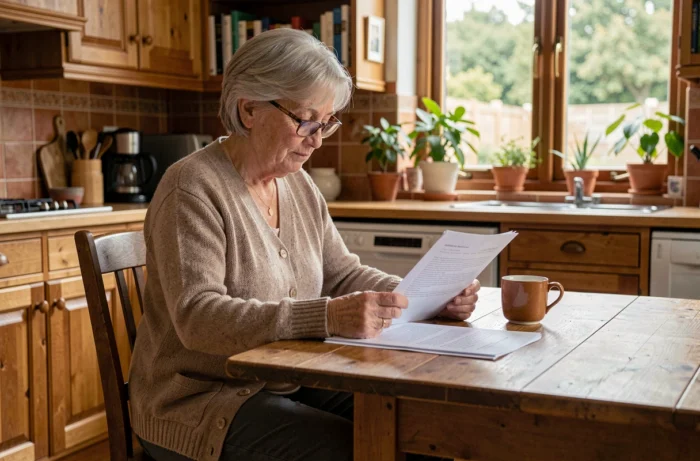
Keeping seniors at home is no longer held back by a lack of financial support or technical solutions. The bottleneck comes earlier: whether home care services (SADs) can actually provide regular visits at times that meet each person’s needs. An adapted home and an approved care plan are no guarantee if no care worker is available in the local area.
Staff shortages and continuity of home care services
The actual availability of services depends as much on seniors’ needs as on providers’ ability to recruit staff and schedule visits. Working conditions for home care workers, travel time between clients, and fragmented schedules all directly undermine continuity of care.
In rural and suburban areas, a SAD may have funding to cover a service but lack the staff to provide it at the required times. The result: visits spaced further apart, rescheduled time slots, and sometimes cancellations with no replacement. The support exists on paper, but not in the schedule.
We have also seen this pressure affect mid-sized cities, where competition between employers in the social care sector and those in retail and logistics shrinks the pool of candidates. Recent pay increases have not been enough to reverse the trend, and staff turnover remains a structural barrier to building a relationship of trust between care workers and older people.
Among the approaches some SADs are using to stabilize their teams, Cydlab’s services for seniors illustrate an approach that combines local coordination with personalized support, aiming to bridge the gap between an expressed need and an effective response.
Departmental public autonomy service: coordinating local stakeholders
The departmental public autonomy service (SPDA) was designed to improve information, guidance, and access to rights for older people by connecting local stakeholders rather than replacing existing organizations. The practical goal is to ensure that older people and their caregivers do not have to identify the right contact on their own among pension funds, CCASs, SADs, and independent healthcare professionals.
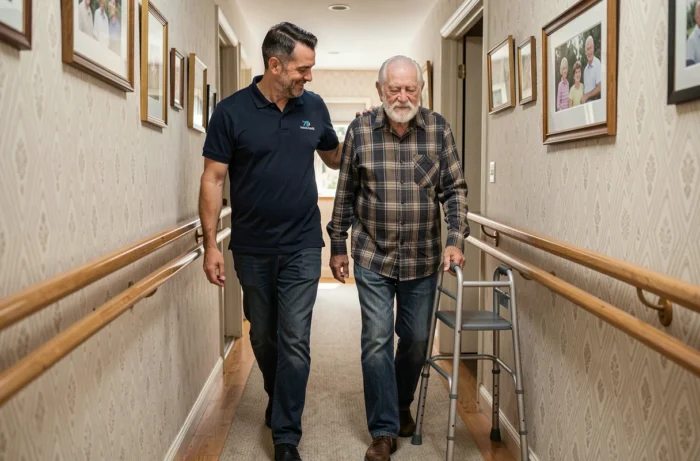
On the ground, implementation of the SPDA varies from one department to another. Coordination is progressing in areas where stakeholders already had established ways of working together (funders’ conferences, MAIA). Elsewhere, the SPDA remains an administrative framework with little practical impact for beneficiaries.
The critical point is the handoff between assessing needs and actually setting up services. An APA care plan may be approved within a few weeks, but finding a provider able to deliver the allocated hours can sometimes take longer than processing the application itself.
The role of SADs in identifying risks and preventing loss of independence
Regulations require home autonomy services to go beyond simply carrying out household tasks or helping with personal care. They must contribute to identifying signs of frailty, abuse, and the needs of family caregivers, as well as preventing loss of independence.
In practice, this means that home care workers, often personal care assistants, need training to spot subtle warning signs: weight loss, unusual confusion, deteriorating living conditions, or increasing isolation. They must also pass these concerns on to the appropriate professionals, such as the person’s GP or a coordinating nurse.
This monitoring role depends on one condition: regular visits. A care worker who visits twice a week can spot a change that someone who comes once every two weeks will miss. The staff shortages mentioned above directly reduce this capacity to monitor people’s wellbeing.
- Spotting signs of malnutrition or dehydration while preparing meals
- Identifying fall risks caused by clutter or poor lighting
- Alerting others to caregiver burnout when a family member is covering unfilled care hours
- Detecting financial abuse or aggressive sales practices
Adapting the home: what changes for tenants
Home adaptations are not just for homeowners. Tenants can also carry out work, but the process differs in several ways. Written permission from the landlord is required before making any structural changes, such as installing a walk-in shower, fitting wall-mounted grab bars, or widening a doorway.
The MaPrimeAdapt’ scheme covers part of the cost of this work, including for tenants in privately rented homes, provided the property is their primary residence and household income falls within the set limits. In social housing, however, the landlord often manages adaptation work, with its own timelines and priorities.
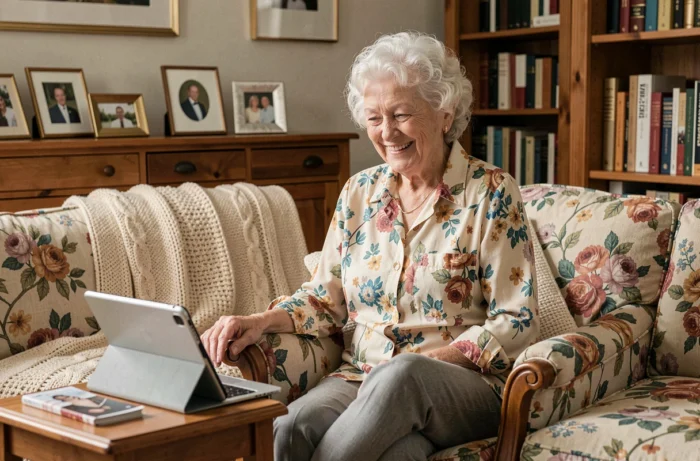
Before any work begins, check three things:
- Does the lease allow adaptation work, or does it require the property to be restored when you move out?
- Will the landlord agree to leave the equipment in place at the end of the lease (this is common for grab bars and motorized roller shutters)?
- Does the funding cover the entire remaining cost, or will you need to apply for additional support from your pension fund or the department?
Integrated care and support: the shift to home autonomy services
Regulatory changes are prompting former SAADs and SSIADs to merge into home autonomy services (SADs), which can provide both day-to-day support and nursing or personal care. Depending on local arrangements, a single service may provide care directly or coordinate it with independent providers.
This integration simplifies the beneficiary’s care journey, eliminating the need to juggle two organizations with separate schedules. However, it requires management teams to develop new skills and shared information systems for support and care services.
The expected benefits are twofold: a faster response when a person’s health deteriorates and fewer avoidable hospitalizations caused by inadequate monitoring. The same obstacle remains: without enough properly trained care workers, integrating support and care remains more of an organizational goal than a reality for seniors living at home.