On Zalando, an Italian size 38 does not correspond to a French size 38, and two models from the same brand can fit differently depending on the collection. The size correspondence varies based on the cut, fabric, and measurement system used by the manufacturer. Mastering the tools of the platform and understanding the discrepancies between brands helps to limit returns and refine orders.
Size discrepancies between brands on Zalando: what conversion charts do not show
The size guides displayed on each product page are based on data provided by the brand itself. Zalando aggregates this information without standardizing it. Two size M dresses from two different manufacturers can have several centimeters of difference in the bust or waist.
The problem becomes more complicated with brands that use regional sizing systems. A US size 6 converted to EU size does not always yield the same result depending on the chosen conversion table. Scandinavian brands often fit larger than Italian or Spanish brands with the same number.
We recommend never relying solely on the number displayed. The “specific product measurements” section, when available on the page, provides the actual dimensions of the garment in centimeters. This is the only reliable data for comparing two items from different brands. Before finalizing a purchase, consulting the Zalando size guide for your purchases allows you to cross-reference these measurements with your own dimensions.

Zalando size profile and automatic recommendations: actual functioning
Zalando offers a size profile tool accessible from the personal space. By providing their body shape (height, weight, key measurements), the platform generates recommendations on each product page. The system relies on feedback from other customers with a similar profile to refine its suggestions.
The recommendations improve with each kept purchase. The algorithm takes into account the items you keep and those you return. After a few orders, the accuracy increases significantly, provided that you do not use multiple accounts or order for others on the same profile.
The company Fusion, specialized in body analysis and owned by Zalando, has developed a complementary tool based on two photos in fitted clothing. The photos are deleted after processing according to the information published by Zalando. This system predicts measurements and suggests suitable sizes for each item. Stacia Carr, vice president of size and fit at Zalando, indicated that this tool aims to solve one of the main problems in the online fashion industry.
Limits of algorithmic recommendation
The tool does not take into account personal cut preferences. A customer who wears their shirts fitted and another who prefers them loose will receive the same recommendation at identical measurements. The size profile does not replace reading customer reviews on fit.
Reviews mentioning “small fit” or “large fit” remain the most direct signal. We observe that product pages with more than a dozen converging reviews on sizing provide a more reliable indication than the manufacturer’s size guide.
Ordering multiple sizes on Zalando: strategy, hidden cost, and upcoming restrictions
The “Try first, pay later” option explicitly encourages ordering multiple sizes of the same item. Zalando presents this convenience as a way to reduce perceived risk regarding size. In practice, it turns the living room into a fitting room.
This strategy has a cost that the free returns mask. Each returned package generates a round-trip transport, repackaging, and restocking. The logistical and environmental impact of this practice is considerable, even if the customer does not directly bear the cost.
Future restrictions on abusive returns
Recent changes to Zalando’s terms and conditions include stricter wording regarding the condition of returned items. The platform is paving the way for experiments in service modulation for customers who frequently return items. Specifically, this means that accounts with an abnormally high return rate could see their payment or delivery options restricted.
- Items must be returned in their original condition, with tags, to be accepted for return. A worn or washed garment will not be refunded.
- Zalando reserves the right to limit access to deferred payment for profiles with a high return rate.
- The practice of systematically ordering three sizes per item could, in the long run, be identified and penalized by the platform’s algorithm.
Rather than ordering blindly, cross-referencing the size profile, product measurements, and customer reviews reduces the need to order duplicates. It is more efficient and sustainable.

Reliable measurement method for clothing and shoes on Zalando
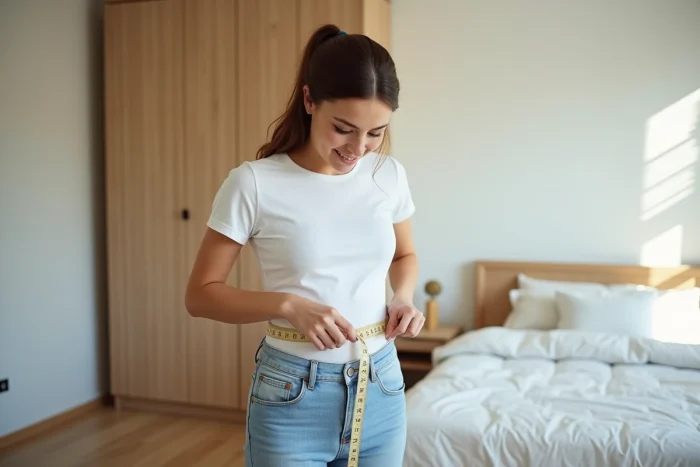
Taking measurements correctly remains the most underestimated lever. A flexible measuring tape, placed directly on the skin or over a thin undergarment, provides usable results. Measuring over a sweater skews the data by several centimeters.
- Bust measurement: measure at the fullest point, measuring tape horizontal, arms down by the body.
- Waist measurement: measure at the natural waist indentation, without tightening or sucking in the stomach.
- Hip measurement: measure at the widest point of the hips and buttocks, feet together.
- For shoes: measure the foot at the end of the day (the foot swells), standing, by tracing the outline on a sheet and measuring from the heel to the longest toe.
Comparing your measurements to the actual dimensions of the product (and not to the generic conversion chart) gives the most accurate result. Brands that provide flat measurements of the garment facilitate this verification.
For knit or jersey pieces, allow for a tolerance margin: these materials stretch after a few wears. For woven fabrics (woven cotton, denim), the size will hardly change. This technical detail explains why the same size may fit in one fabric and not in another from the same brand.
Refining your profile after each order, reading the experiences of other customers, and measuring your current well-fitting garments to compare with product pages: these three combined habits drastically reduce the error rate on size, without needing to turn every order into a home fitting session.